$60.00Original price was: $60.00.$40.00Current price is: $40.00.
K-Pine Bottle is a 10mL Pine Bottle research formulation featuring lecithin, bromelain, riboflavin, L-carnitine, peptides, and additional formulation components. It is intended for controlled laboratory and research purposes only.
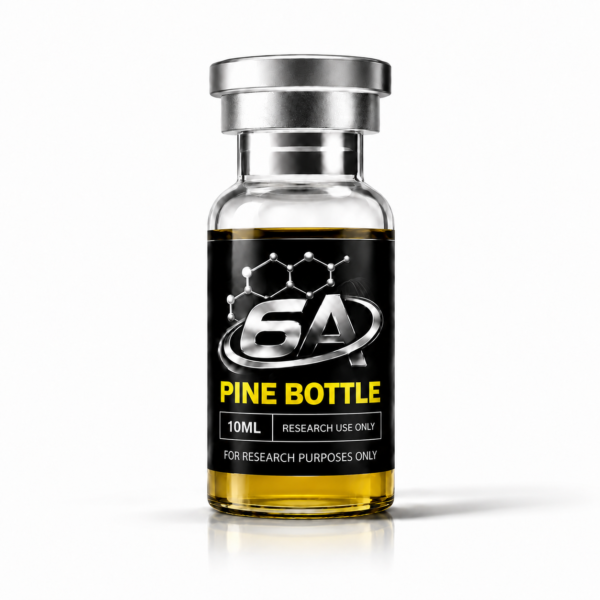
K-Pine Bottle, presented as PINE BOTTLE on the product label, is a specialized 10mL research formulation designed around a combination of functional ingredients that have been investigated in biochemical, cosmetic, cellular, and formulation research.
The formulation is centered around lecithin, bromelain, and riboflavin, while additional ingredients reported for Pine Bottle formulations include L-carnitine, arginine, glutathione, ascorbic acid, adenosine, botanical extracts, and peptide ingredients. The precise composition should always be confirmed against the applicable batch documentation and Certificate of Analysis supplied with the product.
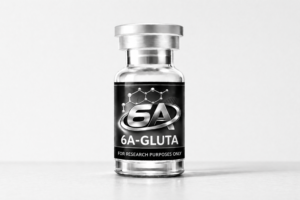
The product is supplied in a 10mL vial, as shown on the product label. Its formulation makes it a useful material for researchers investigating multi-component systems in which enzymes, vitamins, peptides, amino-acid derivatives, antioxidants, and botanical ingredients are evaluated together.
What Is Pine Bottle?
Pine Bottle is a multi-ingredient formulation that has been marketed around research into body-contouring and skin-quality applications. Available product information describes lecithin, bromelain, and riboflavin as principal components, while additional formulation ingredients are included to provide a broader cosmetic and biochemical profile.
For laboratory research, the importance of a formulation such as Pine Bottle is not limited to a single ingredient. Researchers can evaluate how different classes of compounds behave within a combined formulation and can investigate the physical, chemical, and biological characteristics of the resulting system.
The formulation should therefore be evaluated according to its documented composition rather than assuming that every Pine Bottle product has an identical ingredient profile.
Key Components of K-Pine Bottle
Lecithin
Lecithin is a naturally occurring mixture of phospholipids that can be derived from sources such as soybeans and egg yolks. It has been widely studied in biochemical, pharmaceutical, food, and cosmetic formulation research.
Because phospholipids possess both hydrophilic and lipophilic characteristics, lecithin is frequently investigated for its emulsification and membrane-associated properties.
Within Pine Bottle formulations, lecithin is identified as one of the principal ingredients.
Bromelain
Bromelain is a group of proteolytic enzymes naturally associated with pineapple. It has been investigated in biochemical and physiological research because of its ability to break down peptide bonds in proteins.
Bromelain also has a long history of investigation in research involving enzymatic activity, protein degradation, inflammatory pathways, and tissue-related biological processes.
Its inclusion gives Pine Bottle an enzymatic component that can be studied alongside the formulation’s lipid, vitamin, peptide, and antioxidant constituents.
Riboflavin
Riboflavin, also known as vitamin B2, is a water-soluble vitamin involved in cellular metabolism. It serves as a precursor for flavin cofactors that participate in numerous enzymatic reactions.
Researchers study riboflavin in areas including energy metabolism, oxidative biology, enzymology, and cellular function.
Pine Bottle identifies riboflavin as one of its principal formulation components.
The principal components and 10mL vial specification are supported by available Pine Bottle product information.
Additional Formulation Components
Available Pine Bottle ingredient information identifies several additional components, including:
L-carnitine
Arginine
Glutathione
Ascorbic acid
Adenosine
CICA / Centella asiatica extract
Chamomile extract
Salvia miltiorrhiza root extract
Scutellaria baicalensis root extract
Papain
Acetyl hexapeptide-8
Palmitoyl pentapeptide-4
Palmitoyl tetrapeptide-7
Cyanocobalamin
These ingredients have different chemical and biological characteristics and are individually investigated across cosmetic science, biochemical research, enzymology, antioxidant research, peptide research, and cellular biology.
L-Carnitine Research
L-carnitine is an amino-acid derivative involved in the transport of long-chain fatty acids into mitochondria. Because of this role, it has been studied extensively in cellular metabolism and energy-production research.
Its presence in a multi-component formulation provides an additional metabolic component that can be investigated under controlled experimental conditions.
Glutathione Research
Glutathione is a naturally occurring thiol-containing tripeptide that plays an important role in cellular redox biology.
It has been widely studied in oxidative-stress research because it participates in maintaining cellular redox balance and interacts with numerous antioxidant and detoxification pathways.
Ascorbic Acid Research
Ascorbic acid, commonly known as vitamin C, is an important water-soluble antioxidant and enzyme cofactor. It is frequently investigated in biochemical, dermatological, nutritional, and cellular research.
Its inclusion adds an additional antioxidant component to the Pine Bottle formulation.
Peptide Components
Pine Bottle product information also identifies several cosmetic peptides, including acetyl hexapeptide-8, palmitoyl pentapeptide-4, and palmitoyl tetrapeptide-7. These peptides are studied primarily in cosmetic and skin-biology research involving extracellular matrix processes, skin appearance, and peptide-mediated cellular signaling.
Because the individual peptides have different structures and mechanisms, researchers should evaluate each component according to its specific characteristics rather than treating the entire formulation as a single peptide.
Multi-Component Research Formulation
One of the defining characteristics of K-Pine Bottle is its multi-component formulation.
Instead of containing a single active compound, Pine Bottle brings together ingredients belonging to several different chemical categories. These include phospholipids, enzymes, vitamins, amino-acid derivatives, antioxidants, peptides, and botanical extracts.
This makes the formulation particularly relevant to research examining complex ingredient systems.
Researchers may investigate:
Ingredient compatibility
Formulation stability
Chemical interactions
Peptide stability
Enzymatic activity
Antioxidant characteristics
Physical properties
Component identification
Batch-to-batch consistency
Analytical characterization
Research Applications
K-Pine Bottle may be studied in controlled laboratory research involving:
Cosmetic formulation research
Peptide research
Biochemical research
Enzyme research
Antioxidant research
Cellular biology
Skin-biology research
Extracellular matrix research
Lipid and phospholipid research
Formulation stability studies
Ingredient compatibility studies
Analytical chemistry
Product characterization
The actual research application should be determined by the laboratory’s experimental objectives and applicable regulations.
Analytical Characterization
Multi-component products require careful analytical characterization because several chemically different substances are present within the same formulation.
Researchers may use validated analytical methods to evaluate the identity, concentration, purity, stability, and compatibility of individual components where appropriate.
Chromatographic, spectrometric, spectrophotometric, and other analytical techniques may be selected according to the characteristics of the compound being examined.
Proper analytical documentation can help researchers establish consistency between batches and identify potential changes that occur during storage.
Quality Control
Quality control is especially important for complex formulations.
Researchers should maintain documentation for:
Product name
Lot or batch number
Manufacturing information
Container size
Ingredient composition
Storage conditions
Certificate of Analysis
Analytical results
Experimental conditions
A properly documented research material allows experimental results to be compared more effectively and helps reduce uncertainty caused by undocumented changes in the material.
Product Format
The supplied product is presented in a 10mL vial, as shown on the product label.
The label identifies the product as PINE BOTTLE and states 10ML and RESEARCH USE ONLY / FOR RESEARCH PURPOSES ONLY.
Storage and Handling
K-Pine Bottle should be stored according to the specific product documentation, manufacturer instructions, and applicable Certificate of Analysis.
Researchers should protect the material from unsuitable environmental conditions and avoid unnecessary exposure to excessive heat, light, moisture, or temperature fluctuations where applicable.
Because complex formulations can have different stability characteristics depending on their ingredients and packaging, batch-specific storage instructions should always take precedence over generic recommendations.
Appropriate laboratory procedures should be followed when the product is being examined, sampled, or incorporated into an experimental protocol.
Research Reproducibility
Reproducibility is an important consideration when multi-component research formulations are studied.
Researchers should maintain consistent experimental conditions and document the exact material used in each experiment. Product lot information, storage history, preparation conditions, analytical measurements, and experimental parameters should be recorded whenever relevant.
This documentation allows researchers to identify whether observed differences originate from experimental variables, formulation differences, or other factors.
Important Research Disclaimer
K-Pine Bottle is presented for laboratory and research purposes only. It is not intended for human consumption, self-administration, veterinary use, diagnosis, treatment, mitigation, or prevention of any disease or medical condition. No claims regarding therapeutic efficacy or safety should be inferred from the individual ingredients or from research involving related compounds. This product should only be handled and evaluated by appropriately qualified personnel in accordance with applicable laboratory procedures, institutional requirements, and relevant regulations.
K-Pine Bottle for Research
K-Pine Bottle (Pine Bottle 10mL) provides researchers with a multi-component formulation containing lecithin, bromelain, riboflavin, and additional reported ingredients including L-carnitine, antioxidants, peptides, and botanical extracts.
Its diverse composition makes the product relevant to research involving formulation science, peptide research, biochemical characterization, enzyme activity, antioxidant systems, cellular biology, and cosmetic ingredient research.
Rather than focusing on a single compound, researchers can examine the complete formulation and characterize its individual components under controlled laboratory conditions.
Reviews
There are no reviews yet.
Be the first to review “K-Pine Bottle – Pine Bottle 10mL Research Product”Cancel Reply

Reviews
There are no reviews yet.